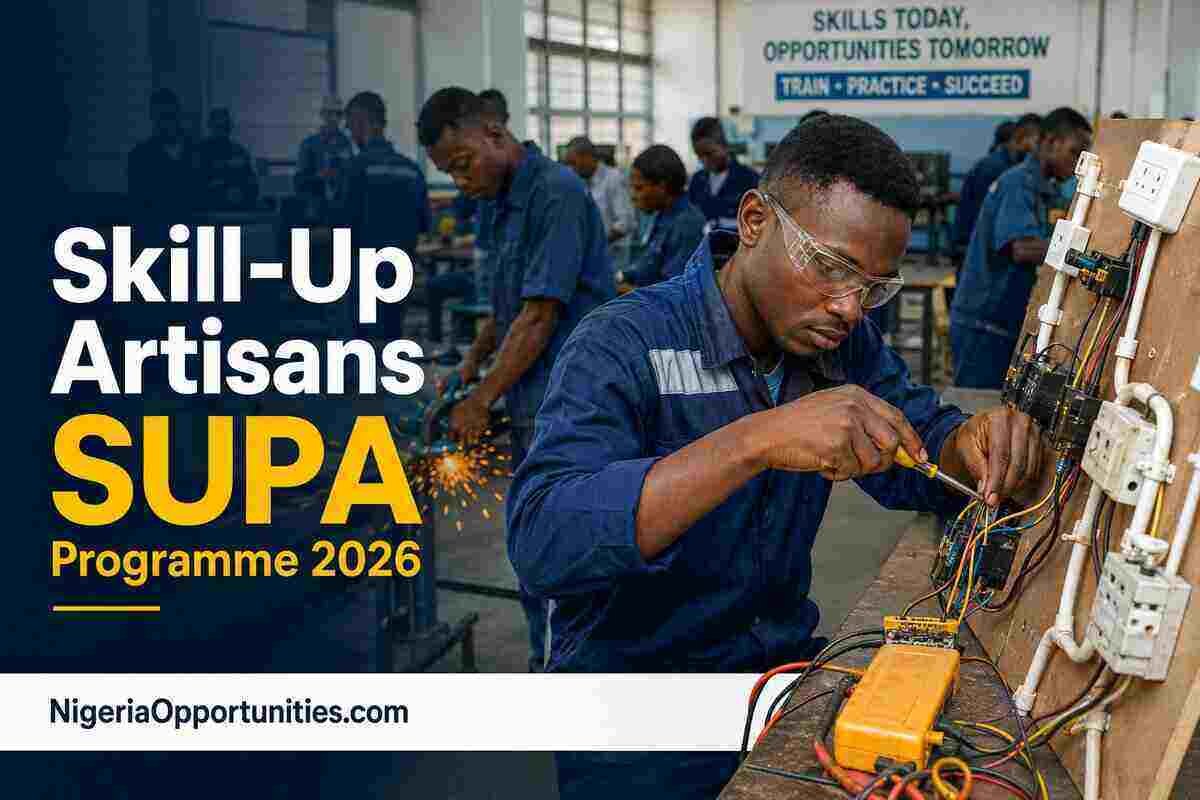
Skill-Up Artisans SUPA Programme 2026 is a Federal Government initiative designed to improve the skills, productivity and earning capacity of artisans across Nigeria.
The programme focuses on artisans working in practical trades and aims to help participants improve their technical skills, business practices, use of modern tools and access to wider economic opportunities.
SUPA is implemented through the Industrial Training Fund (ITF) in collaboration with relevant government and industry stakeholders.
The programme is particularly relevant to Nigerian artisans who already work in a trade but need additional training, certification, modern equipment knowledge or business skills to improve their services.
What Is the Skill-Up Artisans SUPA Programme?
The Skill-Up Artisans Programme (SUPA) is a government-backed skills development initiative created to upgrade the capabilities of artisans in Nigeria.
Rather than focusing mainly on people who have never learnt a trade, SUPA is aimed at existing artisans who already have practical experience and need to improve their skills and professional standards.
The programme covers areas such as technical competence, modern work methods, safety, entrepreneurship and other skills that can help artisans compete more effectively in the labour market.
It is part of the Federal Government’s wider effort to improve the informal sector and make Nigerian artisans more productive and competitive.
Who Is SUPA For?
SUPA is primarily designed for Nigerian artisans and skilled workers.
The programme is relevant to people working in trades such as:
- Plumbing
- Electrical installation
- Welding and fabrication
- Auto repairs
- Carpentry
- Tiling
- Painting
- Masonry
- Fashion and garment making
- Hairdressing and beauty services
- Refrigeration and air-conditioning
- Furniture making
- Other technical and vocational trades
The exact trades and training opportunities available can vary according to the particular SUPA training phase and location.
What Does SUPA Training Cover?
SUPA is not simply about teaching an artisan how to perform a trade from scratch.
The programme is designed to upgrade existing skills and help artisans work to better professional standards.
Training can cover areas such as:
Technical Skills
Participants can improve their knowledge of modern tools, equipment, techniques and industry practices related to their trade.
Occupational Safety
Artisans can learn safer ways to handle tools, equipment and materials while working.
This is particularly important for trades such as welding, electrical work, construction and mechanical repairs.
Digital Skills
Modern artisans increasingly need digital tools to communicate with customers, advertise their services and manage their businesses.
Digital training can therefore help participants make better use of technology in their businesses.
Entrepreneurship
SUPA also recognises that being good at a trade does not automatically make someone good at running a business.
Business-related training can help artisans improve areas such as customer management, pricing, record keeping and business growth.
SUPA Programme Benefits
One of the main benefits of SUPA is the opportunity to upgrade an existing trade skill through structured training.
Participants can benefit from:
- Improved technical knowledge
- Exposure to modern tools and techniques
- Better understanding of occupational safety
- Entrepreneurship and business skills
- Digital skills
- Improved professional competence
- Opportunities for certification
- Greater ability to compete for work
- Better prospects for growing an artisan business
The programme is particularly useful for artisans who have learnt their trade informally and want to improve their professional standing.
SUPA and Artisan Certification
Certification is an important part of the wider SUPA initiative.
Many Nigerian artisans learn their trades through apprenticeships or years of practical experience without obtaining formal recognition of their skills.
SUPA seeks to help address this gap by supporting the recognition, assessment and certification of artisans.
Formal recognition can make it easier for skilled workers to demonstrate their competence when seeking contracts, employment or other opportunities.
Is SUPA Free?
The Skill-Up Artisans Programme is a government-supported skills development initiative.
Eligible participants selected for the programme are not expected to pay an agent to secure a place.
Applicants should be particularly careful with people who claim they can guarantee SUPA admission in exchange for money.
Only use official government channels when registering or providing personal information.
SUPA Eligibility Requirements
SUPA is primarily targeted at artisans and skilled workers in Nigeria.
Unlike many beginner-focused skills acquisition programmes, the programme is designed around people who already have practical experience in a trade.
A typical applicant should therefore:
- Be a Nigerian
- Be an artisan or skilled worker
- Have practical experience in a trade
- Be willing to participate in the required training
- Provide accurate personal information during registration
- Complete any required assessment or verification
Specific requirements can vary depending on the training phase and the trade involved.
How to Apply for SUPA Programme 2026
SUPA registration and mobilisation have been carried out through government-supported channels and artisan registration processes.
Applicants should provide accurate information about their trade, location and personal details during registration.
The process can include artisan registration, verification, assessment and training before a participant is fully enrolled.
It is important to distinguish between registering as an artisan and being selected for a particular training exercise. Registration does not automatically mean that an applicant will immediately begin training.
SUPA Registration Portal
SUPA has used official government platforms and registration channels to identify and onboard artisans.
Because different phases of the programme can use different registration arrangements, applicants should avoid unofficial websites claiming to sell SUPA application forms.
Do not pay anyone simply because they claim to have access to the SUPA registration list.
This is the current SUPA Portal : https://supa.itf.gov.ng/signup
How Artisans Can Benefit From SUPA
The biggest value of the programme is not simply attending a training session.
An artisan can use the knowledge gained to improve the quality of their work and operate their business more professionally.
For example, an electrician can improve knowledge of modern electrical systems and safety standards. A mechanic can learn newer diagnostic techniques, while a welder can improve fabrication methods and workplace safety.
The business side is equally important.
An artisan who knows how to price jobs correctly, keep records, promote services and manage customers has a better chance of turning technical skills into a sustainable business.
SUPA for Young Artisans
Young Nigerians who have learnt a trade through apprenticeship can also benefit from an artisan-upgrading programme such as SUPA.
Many young people enter trades without attending a formal technical college. They learn by working alongside experienced artisans.
SUPA can provide an opportunity for such workers to improve their existing knowledge and gain additional professional skills.
This is particularly useful for young artisans who want to move from working for someone else to operating their own businesses.
SUPA and Small Business Opportunities
Artisan skills can provide a route into entrepreneurship.
A trained plumber can build a plumbing business. An electrician can establish an electrical services company. A furniture maker can produce furniture for homes and offices.
However, technical ability alone is not enough.
Artisans also need to understand how to find customers, price their services, keep financial records and manage their businesses.
This is why entrepreneurship and business development are important parts of artisan upgrading.
Is SUPA the Same as NDE Skills Training?
No.
Both programmes involve skills development, but they target different groups.
NDE Skills Training is broadly focused on vocational training and employment support for unemployed Nigerians, including people who want to learn a trade.
SUPA, on the other hand, is specifically focused on upgrading and professionalising existing artisans and skilled workers.
If you are looking for beginner-friendly government skills programmes, our NDE Skills Training 2026 guide is a more relevant place to start.
Frequently Asked Questions
What is the SUPA Programme?
The Skill-Up Artisans Programme is a Federal Government initiative aimed at upgrading the technical, digital, safety and entrepreneurial skills of Nigerian artisans.
Who can apply for SUPA?
The programme is primarily for Nigerian artisans and skilled workers who already have practical experience in a trade.
Is SUPA for beginners?
SUPA is primarily an artisan-upgrading programme rather than a basic beginner training scheme. People who have already learnt and practise a trade are the main target group.
Is SUPA training free?
The programme is government-supported, and applicants should not pay agents to guarantee selection.
What trades are covered by SUPA?
The programme covers different artisan and technical trades. The exact trades available can vary according to the particular training phase and location.
Does SUPA provide certification?
Certification and formal recognition of artisan skills are among the objectives associated with the programme.
Can young artisans apply?
Yes. Young Nigerians who already work in a trade can be relevant candidates for an artisan-upgrading programme such as SUPA.
More Opportunities for Nigerians
NigeriaOpportunities.com publishes updates on government skills training, scholarships, internships, SIWES placements, jobs, grants, student loans, business funding and other opportunities available to Nigerians.
If you are looking for more skills acquisition opportunities in Nigeria, you can also explore our skills page for other government and private-sector training programmes that may be suitable for beginners, unemployed Nigerians and young professionals.
Keep checking NigeriaOpportunities.com for new government programmes, skills acquisition opportunities and other verified opportunities.
Final Word
The Skill-Up Artisans SUPA Programme 2026 is aimed at Nigerians who already have practical experience in a trade and want to improve their technical, business and professional skills.
For artisans, the opportunity goes beyond learning another trade. It can help improve the way they work, interact with customers and run their businesses.
Anyone interested in SUPA should focus on using official government registration channels and avoid paying individuals who promise guaranteed selection.